

Senior Naughty Dog Character Artist Shares Career & Portfolio Advice for AAA Games
Colleen Larson is a Senior Character Artist at Naughty Dog with over a decade of experience in the video game industry. She blends her lifelong passions for art and video games to create world-class game characters that are rich in personality and narrative. Her credits already include The Last of Us Part I, The Last of Us Part II, and the upcoming Intergalactic: The Heretic Project, and we await new character drops to her portfolio that will continue to infuse her work with depth, emotion, and storytelling.
While we find Colleen today working professionally in 3D character art for games, she actually spent most of her life aspiring to work as a 2D artist. “I can’t really remember a time when I wasn’t drawing, and although my path within the art sphere swerved a few times, I always knew that I wanted to be an artist professionally.” When Colleen enrolled at San Jose State University to study 2D illustration, she imagined becoming an animator, but realized she didn’t enjoy working through multiple animation frames as much as she liked focusing on single illustrations. This realization eventually helped her to focus her degree on character concept art for games.
That said, 3D art was always somewhere under the surface. “I’d taken a couple of introductory 3D classes to earn my BFA in Illustration, but it wasn’t until just before my senior year that it somehow clicked for me,” Colleen explains. “There had been signs in the years leading up to this point that I was being drawn to 3D, game art, and sculpting, but it didn’t fully catalyze until that moment. A spark was lit for me during that semester that has never gone out, and I really feel like I’ve found my calling in the world of 3D character art.”
Colleen’s transition into 3D art came from an out-of-the-blue opportunity to intern at a San Francisco studio called Linden Lab. “In the interview, I was showing both 2D and 3D work, but my 3D work was mostly PolyPainted ZBrush sculpts. They told me during the interview that the position was actually 3D-focused,” Colleen explains. “I wanted to be honest, so I told them that I had no game-art experience. They said, ‘We’ll teach you’ — and they did! Over the next two-and-a-half years, I learned both on the job and in classes in my free time. It felt like an entire new world had opened up to me, and I’ll forever be grateful to that team for giving me a chance and allowing me to launch my career!”
Breaking into the Industry
For artists early in their careers, it can be intimidating to see professionals in Senior roles at AAA game studios and wonder if they can make it, too. And it’s important to remember that every artist has their own journey to follow. “I think that self-doubt never fully goes away,” Colleen says. “It can be a gift which keeps us humble as long as we don’t let it paralyze us.”
Early in her career, Colleen herself didn’t know if she could break into a field that was almost completely new to her. She felt at a disadvantage. “My education had not been very thorough in terms of the latest and greatest game art skills and techniques,” Colleen explains. “But the strong suit of the program was their focus on artistic fundamentals. For my entire career, I’ve relied heavily on those skill sets and my artistic instinct. I believe that they are the foundation upon which any character artist should build the rest of their skill sets. This includes knowledge of anatomy, appeal, design/shape language, composition, lighting, color theory, and so on.”
“Aspiring character artists should think deeply not only about creating a stunning piece but also about imbuing that character with a sense of life and narrative. After all, we are storytellers in our own way, and that level of attention to detail and thoughtfulness often catches the right kind of attention.”— Colleen Larson
When it comes to common traps that younger artists face, Colleen explains: “One of the pitfalls I see many new character artists making is that they feel the need to design their own concepts for their portfolio,” she explains. “I actually recommend against that, for two reasons: one, design is an entire discipline in its own right, and although as character artists we have to have a sense of design, it doesn’t inherently make us designers. That skill is cultivated over many years. Secondly, choosing an existing concept basically simulates the job for yourself. Not only do you take the burden of design off your shoulders, but you show potential employers how well you can translate that concept into 3D.”
Colleen continues: “Additionally, many young artists seem to feel the need to learn rigging, animation, and other auxiliary skills. In my opinion, an artist trying to break in should focus on creating the most solid and visually impressive character possible within the confines of the game art pipeline. This will mean thoughtfully crafted anatomy, clothing, props, textures, materials, lighting, and pose. Additionally, aspiring character artists should think deeply not only about creating a stunning piece but also about imbuing that character with a sense of life and narrative. After all, we are storytellers in our own way, and that level of attention to detail and thoughtfulness often catches the right kind of attention.”
Crafting AAA Characters
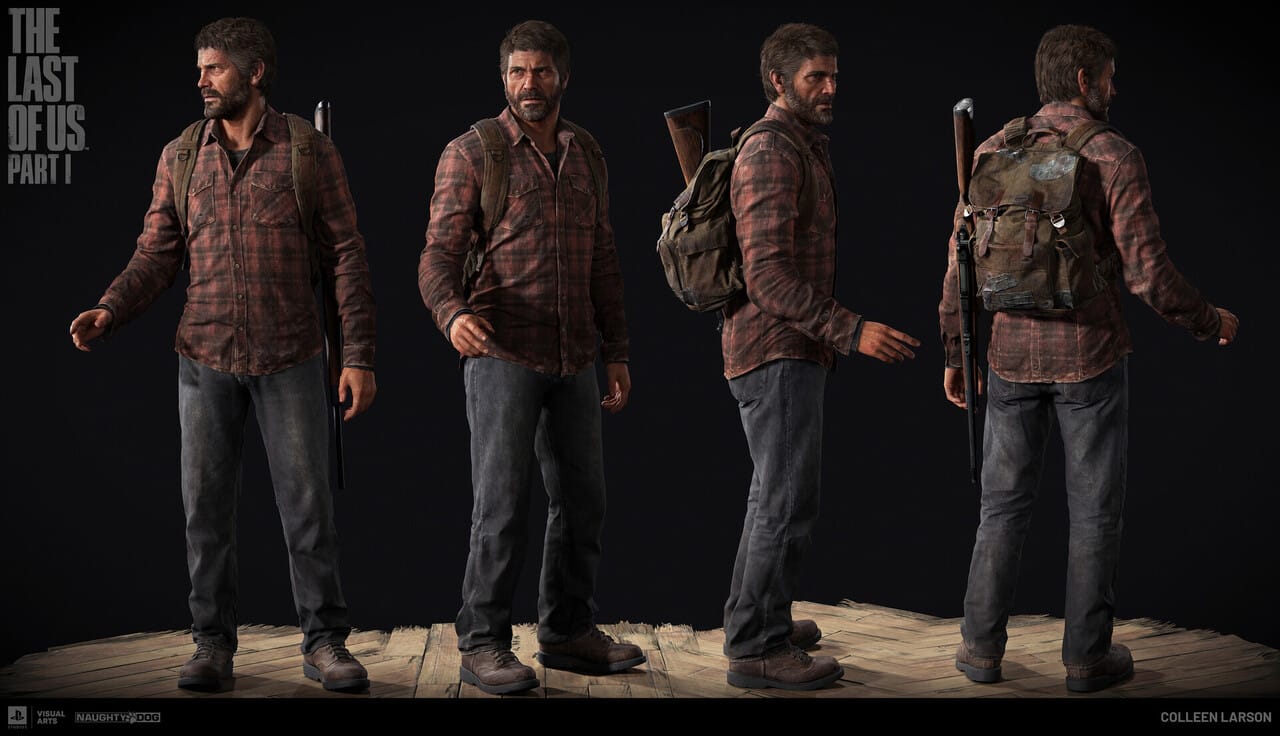
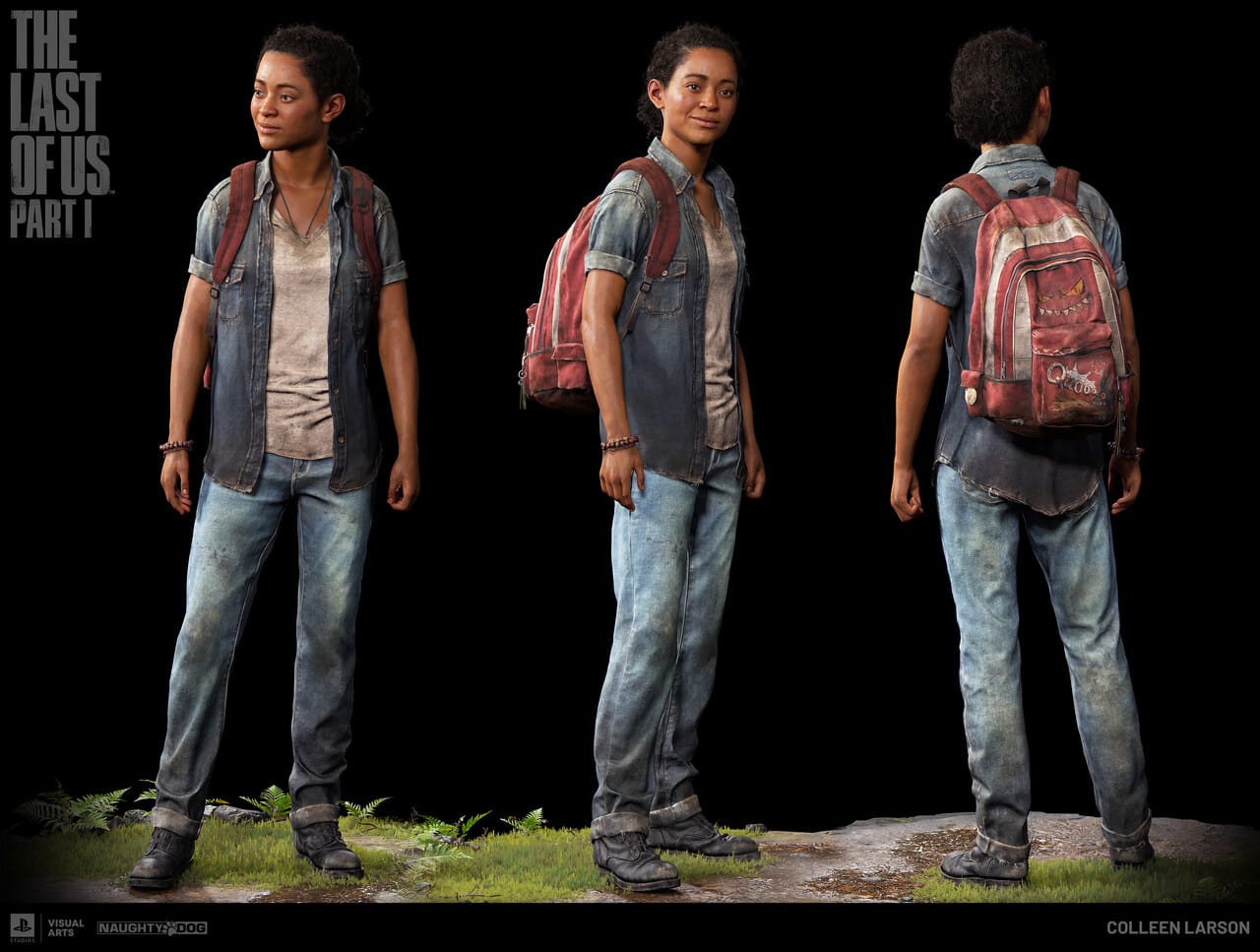
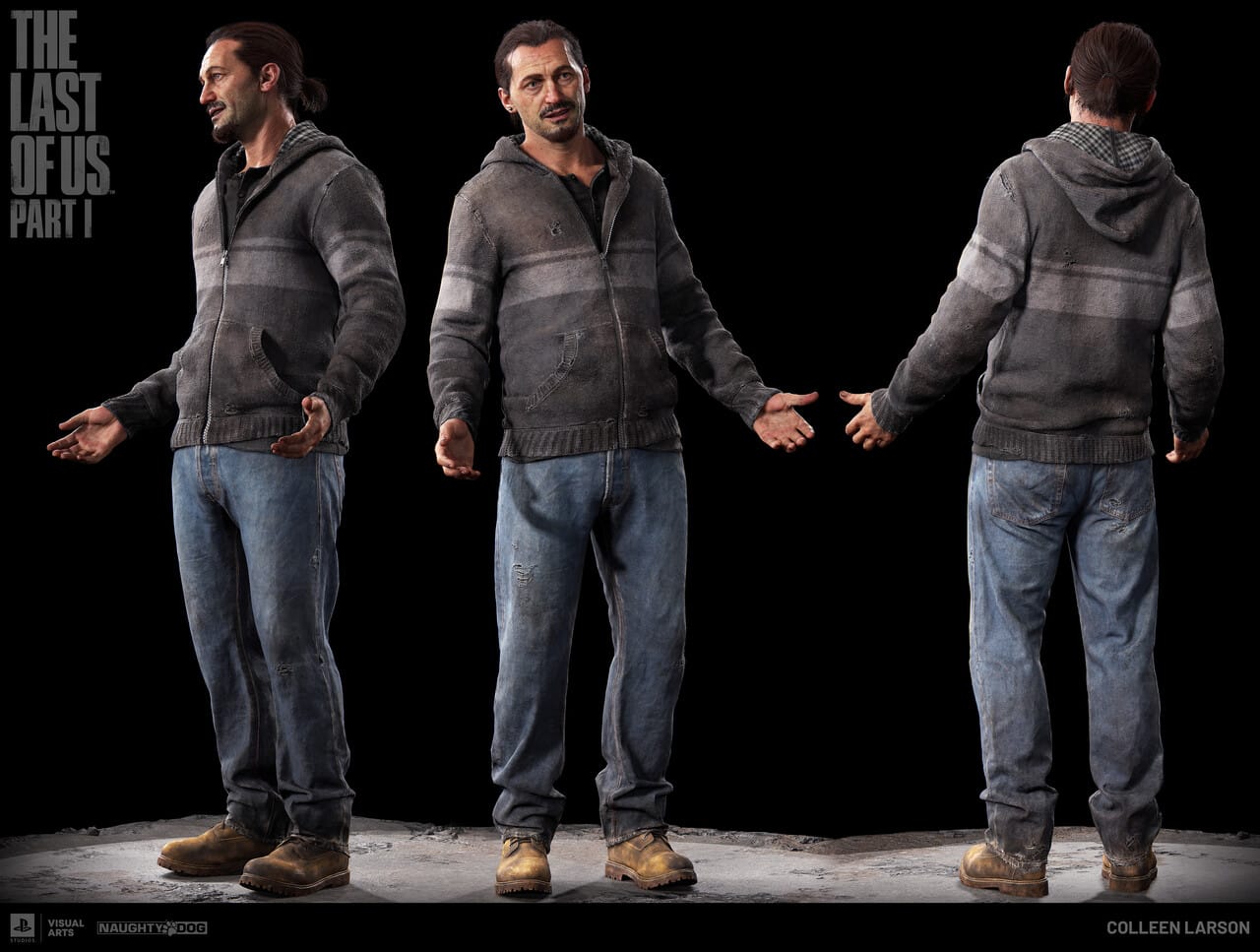
Colleen’s character work on The Last of Us Part I and Part II is nothing short of exceptional. “These titles are very near and dear to my heart,” she explains. “I worked on Part I for about four years, and spent about eight months on Part II. I had the chance to work on a lot of different tasks and characters over that time, and the mentality I tried to adopt and still try to maintain is to put a bit of myself, care, and narrative into everything I do regardless of what type.”
For TLOU characters, part of the fun for Colleen was adding dirt, grime, and sometimes even blood. “I would consider things like, what part of their clothing or gear are they touching, as those areas would accumulate more oils from the body,” she says. “If there is blood, is it dried or wet, is it their own blood or someone else’s? How much time do they spend out in the sun, and how sunbleached are their clothes and gear? Might there be some dirt and mud caked on their shoes and pants? These are all elements I like to consider when I work on a character, whether NPC or hero. The only real difference between the two is that heroes tend to get a lot more time and so these things can be developed more thoughtfully.”
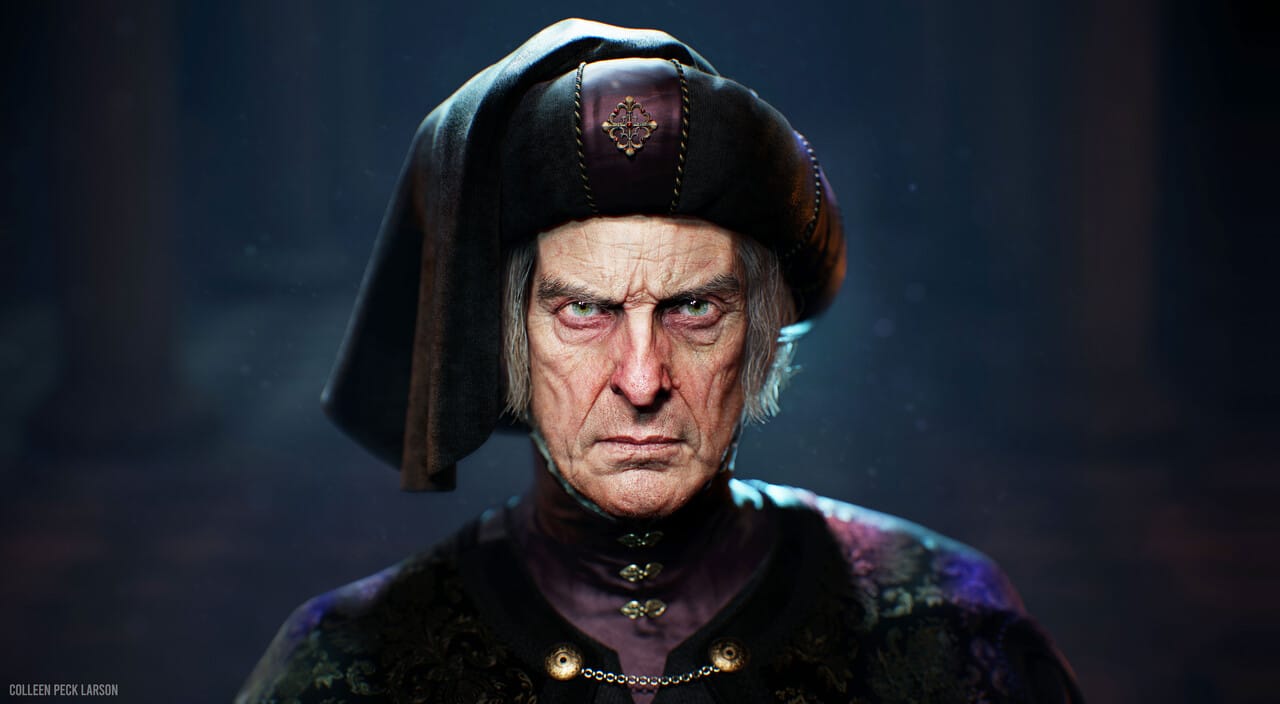
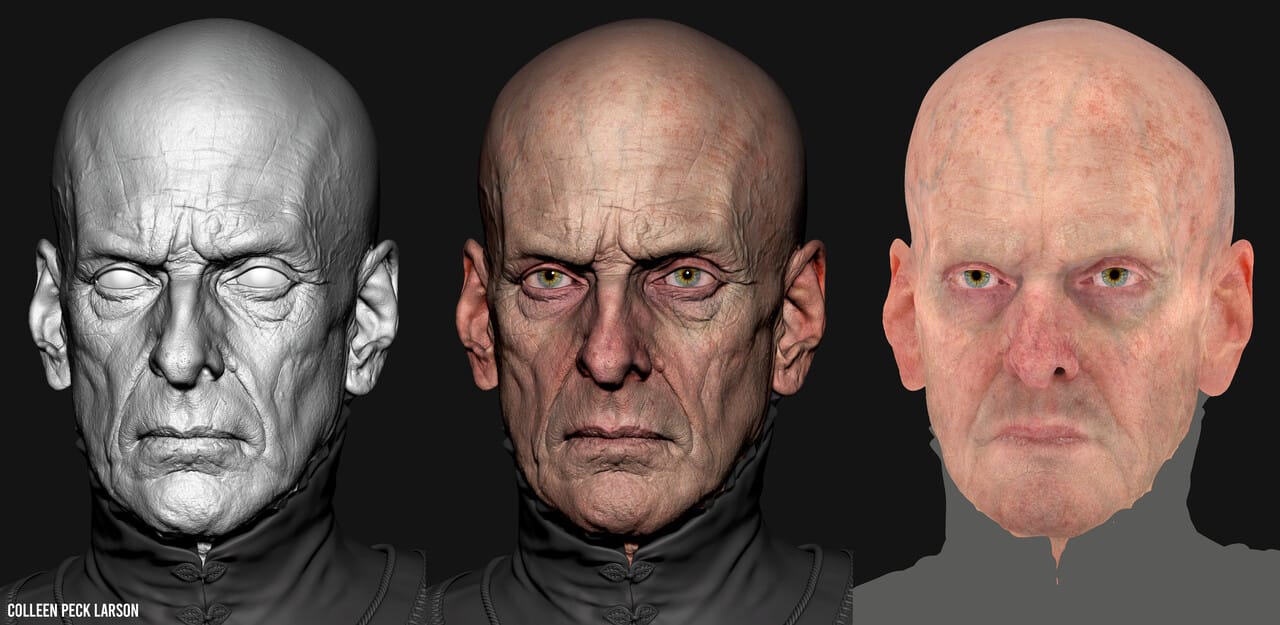
Beyond the professional characters in Colleen’s portfolio, she also takes time to create professional-level characters for her personal portfolio in her spare time. She explains: “As much as I am proud of the work that I was a part of on TLOU, my favorite character in my portfolio is my Frollo project. I chipped away at it for many years and even went back to the drawing board on big chunks of it, more than once. To me, it represents the triumph at the end of the journey. Not perfect, but a time capsule of my skills at the time. I grew so much over the years that I worked on it. And best of all, I believe that it conveys not only the visuals but evokes the emotion that I intended. The project really pushed my understanding of realism to a level that had previously seemed impossible. And I hope that it resonated with viewers as well.”
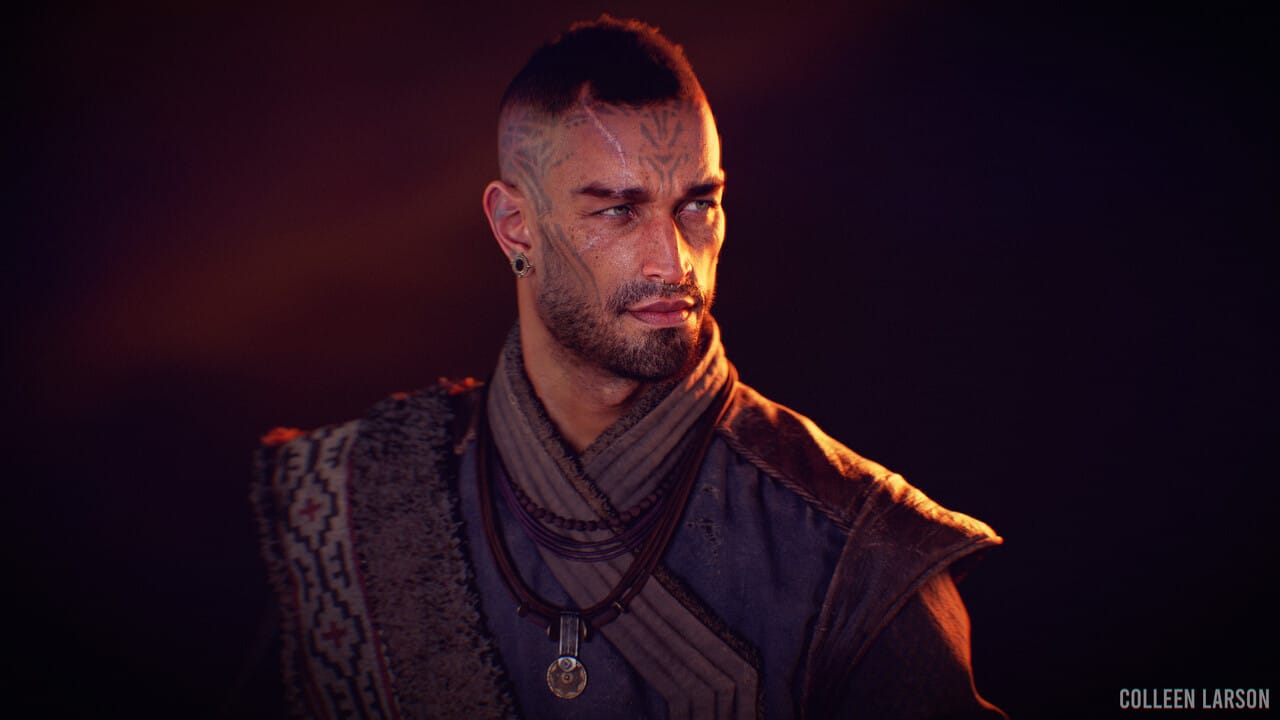
Colleen also created an impressive character for The Gnomon Workshop in her title "Creating a Character Bust: From Ideation to Final Render." “The character was a huge undertaking for me. On one end, I executed the character much faster than I expected, but at the same time, crafting a workshop on my entire pipeline was a massive learning curve. I think this forced me to reflect on my approaches and drill down into why I do certain things.”
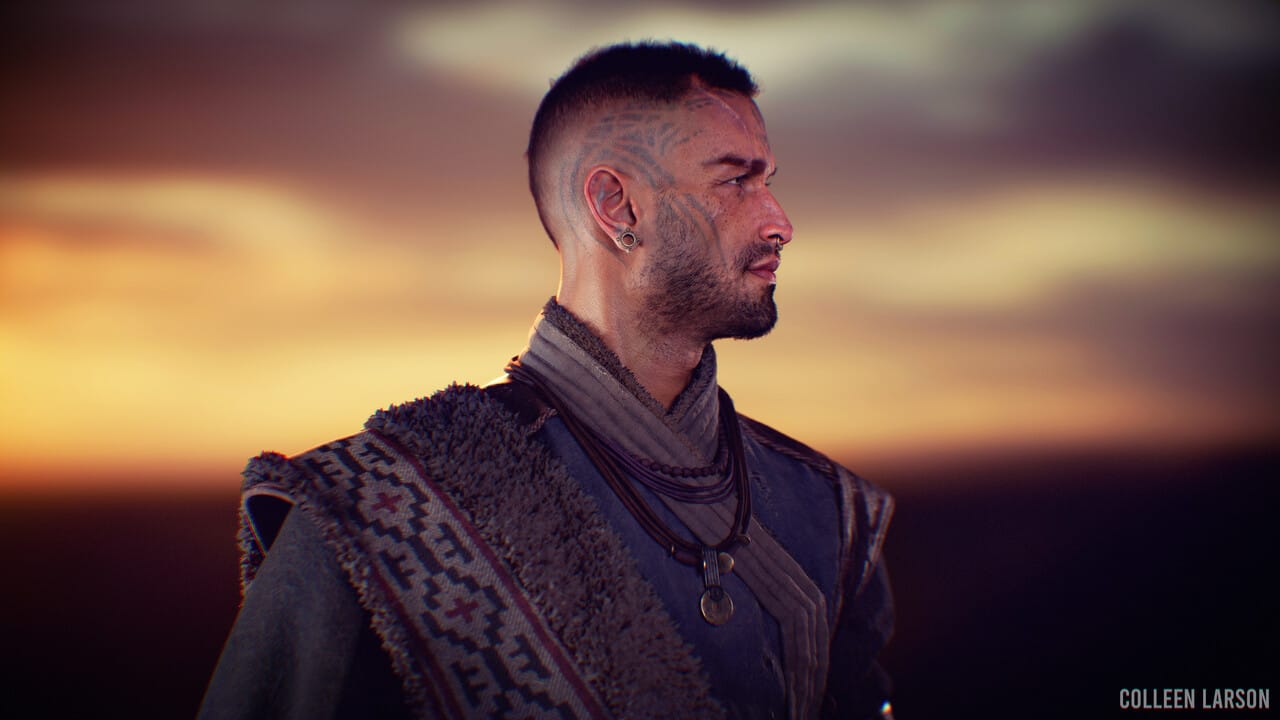
Watch the First 2 Lessons in Colleen’s Workshop for Free.
Having grown up loving both stylized art and realism equally, Colleen finds that her characters often end up with more than a little stylization, even on the more realistic projects. “For me, this is what gives a character life. But it’s super difficult to achieve that spark of life. It’s almost this X-factor that, for me, I don’t get until I get it. A lot of the time in my personal work, I spend time experimenting and shifting things, even just slightly, until they feel right.”
“Character art is really hard and time-consuming, and we should try not to rush ourselves because by doing so we cheat ourselves out of growth and the project out of its full potential.” — Colleen Larson
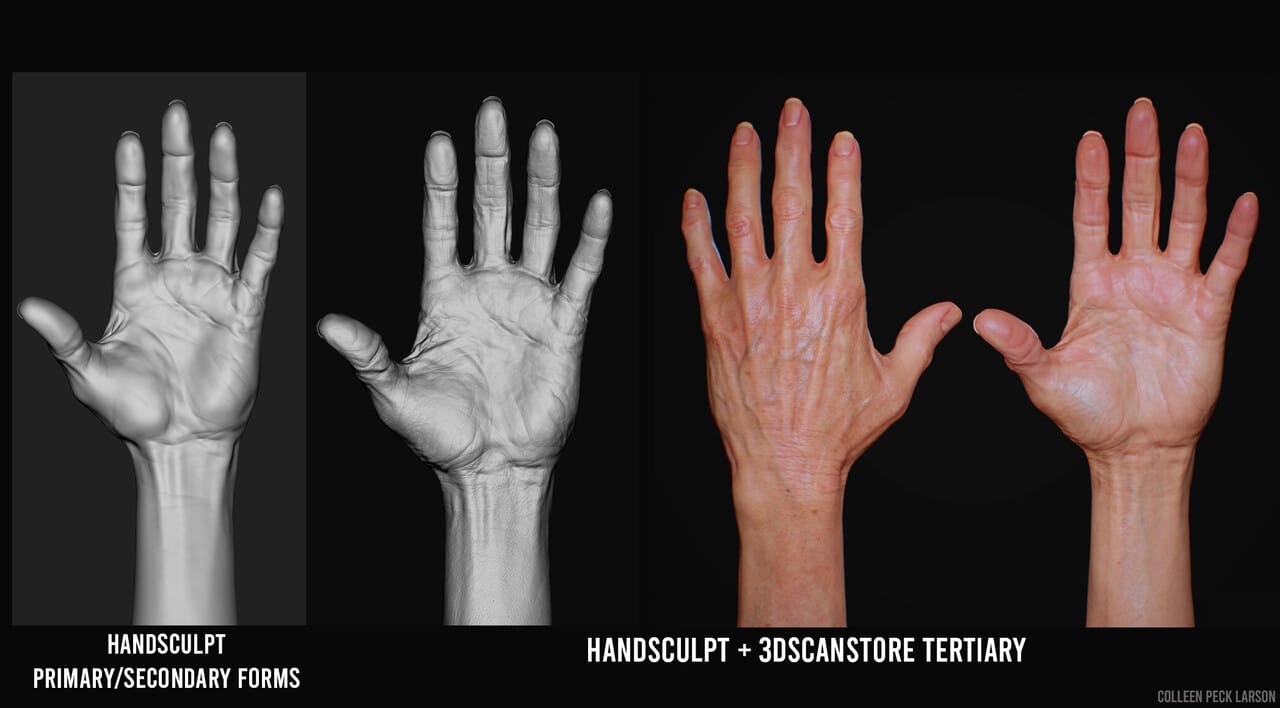
Colleen explains that the key to jumping from a well-sculpted character to one that feels alive is to channel an emotion through them. She explains: “One key aspect is that I think a lot of artists could focus on the eyes more, especially the eye textures themselves. I tend to like to put some eyeballs on the character right away and paint light and shadow on the sclerae and irises. For me, this just grounds them and makes them feel more human. And the eyes for me serve as kind of a guiding light for the rest of the face, which in turn is the guiding light for the rest of the character. Studying scans of both anatomy and clothing is a game-changer. We can use the scans as a quality bar for realism, but then choose to push and pull the forms a little further than reality allows.”
When creating characters, it's easy to fall into the trap of focusing on props and details without paying attention to the most crucial part: the character's head. Colleen explains: “I think beautiful and eye-catching character art pieces can be made with heads that are lackluster, but it truly damages the potential quality of a piece. What people may not realize is that sculpting a really good head that has that spark of life and is unique is very, very difficult, and it simply takes time. The hardest part is when you begin to overwork it and end up liking your previous versions better. That’s when it’s necessary to take some time away from the project, maybe study head anatomy, or get some feedback from people you trust, and then continue. What I hope to remind folks is that character art is really hard and time-consuming, and we should try not to rush ourselves because by doing so we cheat ourselves out of growth and the project out of its full potential.”
When it comes to software and techniques, while technology is continually evolving, for Colleen it’s the software and workflows she’s used for years that still apply in her daily work. She explains: “3D scans for heads and bodies as well as clothes are the norm, with Marvelous Designer skills still being very relevant. Hair cards are still in use, but now, strand-based hair is becoming more common, being authored in software like X-Gen and Houdini.”
The big shift for Colleen has been deepening her familiarity with Unreal Engine and continuing to push herself in areas where she feels weakest. She continues to explain: “In terms of overall direction of the industry and duties of a character artist, I am seeing outsourcing being relied on heavily by many studios. So feedback skills are also an important element. But overall, ZBrush, Maya, Substance Painter, Marvelous Designer, and rendering in either Marmoset Toolbag or Unreal Engine will remain the core of what character artists should be proficient in for at least the next few years.”
Working at a AAA Studio
Now a Senior Character Artist working at a AAA game studio, Colleen has the opportunity to train, mentor, and give feedback to other artists, as well as other additional responsibilities. “For me, it’s a welcome responsibility as I enjoy mentoring others and working together to get the most out of their work,” she says. “I am also trusted with more demanding/complex or high-profile characters, and the expectation for art quality is also higher. Additionally, Seniors are often looked to for problem-solving and making sure documentation is sufficient for onboarding new team members.”
Working at a world-class studio also requires the ability to collaborate with writers, animators, designers, and other departments. Colleen explains: “Collaborative skills are hugely important in this field. Another common misconception about character art is that we sit alone, making 100% of our characters ourselves, and I increasingly find that this is not the case. Depending on the project's tasks and needs at the time, heads might be handled by another team or studio entirely; this is especially common for hero characters that require complex blendshape systems and need to be set up in a certain way. Other times, the entire head process might fall to the character artist themselves, or just the characterization or final texturing.”
“Being a character artist takes a lot of grit and pure stubbornness. Considering how demanding it is to create a character, let alone a full portfolio, sometimes artistic inspiration is not enough, and discipline and grit have to carry us through.”— Colleen Larson
Colleen stresses that, for character artists, it’s important to keep in mind that you’re a small part of a big project. She elaborates: “We need to deprioritize our egos and remember that everything we do is for the benefit of the game, not for ourselves. It’s crucial that we remain willing to have a back-and-forth with other departments, helping where needed, making changes as they arise, and bouncing ideas to reach better solutions for everyone. I think the key to collaboration is patience, empathy, and the understanding that we are part of something bigger than ourselves.”
When it comes to what makes a successful character artist, Colleen advises that: “Above all else, humility and a willingness to learn and collaborate are most important. With that mindset established, everything else falls into place. Being kind, giving, and humble goes a very long way. Being a character artist also takes a lot of grit and pure stubbornness. Considering how demanding it is to create a character, let alone a full portfolio, sometimes artistic inspiration is not enough, and discipline and grit have to carry us through. It’s a very competitive field with more and more skilled young artists entering the industry every year.”
While the industry might feel cutthroat at times, Colleen explains that: “It’s more important than ever to retain our empathy and desire to lift everyone else up, which will, in turn, lift us. The quality bar will only keep rising, so we need to continually run toward the discomfort of learning new things. This field is not for the faint of heart, but anything worth doing will challenge us.”
Colleen also explains why it’s important to keep creating your own projects, even after making it into a studio position. “The reality is that it can be exhausting to do more art and spend more time at the PC after the workday is done,” she says. “But let’s remember this: We are artists first, before we even thought of entering the industry, and we owe it to ourselves to continue to cultivate that self. It’s rewarding to work on a game with dozens of other talented individuals, but personal projects have a power that cannot be matched by professional work.”
She continues: “The reality at the end of the day is this: Professional work is done for someone else and personal work is done for yourself alone. To me, fear of failure, exhaustion, and complacency are the biggest things holding some people back from growing. I implore anyone reading this to never give up on personal work, because it’s where the greatest growth and fulfillment can flourish.”
Becoming Studio-Ready
When it comes to applying for studio roles, there are qualities that Senior Artists will be on the lookout for in artists’ portfolios. “The first thing that catches the eye, of course, is a high level of execution,” Colleen explains. “That means an excellent adaptation of a concept and a good design sense, solid sculpting and anatomy knowledge, particularly of the head and hands, good knowledge of clothing construction and sculpting, quality hair grooming with cards or strands, high attention to detail, excellent texturing and materials, clean game-ready meshes and UVs, and thoughtful lighting and posing.”
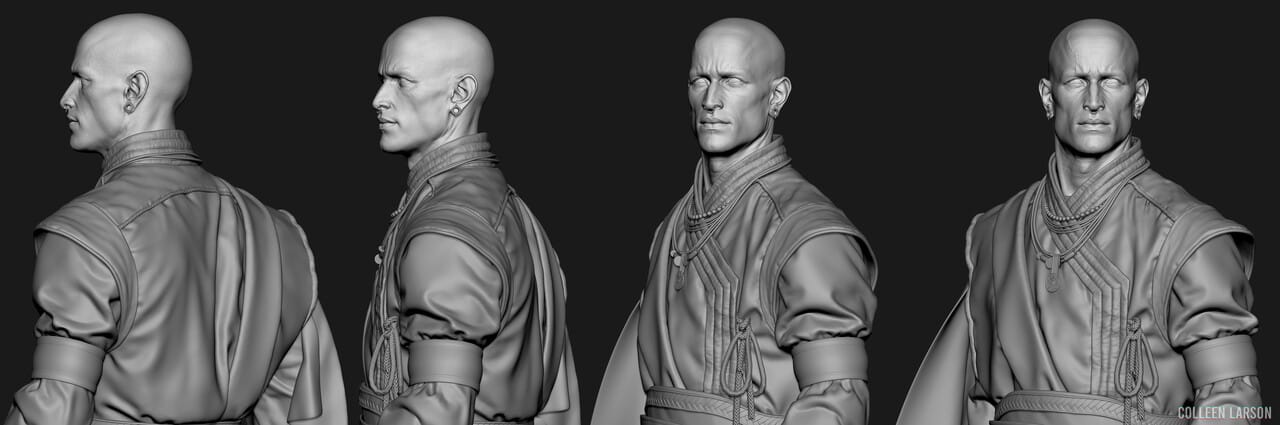
Beyond that, though, there is more that can set a project apart. Colleen adds that it is: “That spark of life or emotion. A character should not only look cool but also say something, evoke an emotion, and convey a narrative. To me, that’s what takes a project from good to excellent.”
“With the rise of AI, the drive for faster output is rampant, but I urge young artists not to fall into the trap of trying to shortcut learning. With the proper foundation under your belt, you will be able to tackle any task given to you, or figure out the solution if you don’t know it inherently.” — Colleen Larson
For younger artists looking to break into games and avoid the common pitfalls that artists can fall into, Colleen suggests: “A curated portfolio of a handful of very solid character art-focused projects should be the goal. Many people keep old, obsolete work in their portfolios out of attachment; those trying to break in need to be ruthless with their portfolios and remove old work as new, better ones are created.”
Another common pitfall is when artists rush their projects. Colleen explains: “Most of the time, the rule of thumb in my mind for sufficiently high-quality new pieces in a portfolio should take a minimum of six months to a year or more. This allows an artist to push the project beyond what was previously possible and to really sit with it to make sure it is as good as it can be.”
For artists looking to prioritize their skill development right now, in a competitive industry that’s always evolving, Colleen suggests that it’s important to: “bolster fundamental art skills. With the rise of AI, the drive for faster output is rampant, but I urge young artists not to fall into the trap of trying to shortcut learning. With the proper foundation under your belt, you will be able to tackle any task given to you, or figure out the solution if you don’t know it inherently.
Additionally, Colleen stresses that cultivating communication skills is also an underrated element to working in this industry. She explains: “As character artists, we are in constant communication with our leads, peers, and other departments. The importance of knowing not only how to communicate well in any situation but also how to advocate for yourself cannot be understated.”
Learning from the Experts
Colleen’s Gnomon Workshop tutorial has been incredibly helpful for artists looking to create high-quality game characters. And in turn, the response has also been rewarding for Colleen. “Mentors had a massive impact on my career, so it is incredibly fulfilling to be able to try and do the same for others now,” she says. “It’s important to me to try to help others in the same way that I was helped, and even the seemingly small efforts can make a big impact. I want to help other artists achieve their goals, and it’s amazing to see the new generations of talent pouring into the industry.”
Now one of more than 250 instructors in The Gnomon Workshop library, Colleen explains a time how workshops helped her own skill development: “The Gnomon Workshop has always carried a lot of weight; I recall the DVDs of courses being highly sought after as a college student. So it means a lot to now be a small part of the library. I think in some ways it’s more accessible than ever to learn the craft of character art. This craft is difficult to learn and expensive, and many can’t afford to attend school for this discipline, making affordable resources absolutely vital. Many studios also offer access to or reimbursement for educational platforms like this, which is an amazing way to continue learning and growing throughout your career.”
We ourselves are works in progress, and the beauty of being an artist is that we only stop growing if we choose to.”— Colleen Larson
Colleen finds there is a power in watching other industry artists work. “There is some magical osmosis effect in seeing the way another artist operates, how they think, how they use the very same software and tools in maybe different methods than you’d think to try, what they deem important, and even dispelling some misconceptions,” she says. “There are so many artists in the world today that inspire me in different ways. I think those who inspire me most are the ones who continue to be passionate and creative in a time where our current world seems bent on squeezing that out of us. Art and creating are inherently part of being human; expressing our worldview, experiences, interests, and emotions through some kind of creative outlet is so important.”
The Future for Game Artists
As we all navigate uncertain times in the entertainment industry, Colleen shares her thoughts on staying positive. “These are unprecedented times in the world as a whole and in the entertainment industry,” she says. “It can be extremely disheartening to watch the ways in which thousands of devs are being affected. I’d like to leave anyone reading this with a message of encouragement…”
She continues: “The greatest way to keep our own personal power is to refuse to allow ourselves to become jaded and discouraged by advocating for ourselves and our fellow developers, and speaking up. Keeping a sense of curiosity and optimism in difficult times requires constant effort. We must cultivate our sense of wonder, our empathy, and the connection to our creative spirit. Maybe that manifests in our own solo projects, in collaborating with friends on a game project, or even just engaging in our communities and spending time traveling or outdoors. This can mean finding ways to look out for and assist fellow devs affected by the upheaval in the industry.”
And to finish off with a reminder of the earlier message: Every artist must go at their own pace. Colleen adds: “Our individual journeys are totally unique to us. For those concerned about the industry's future, I believe it will eventually stabilize, and in the meantime, it’s imperative that we maintain our principles. The future of the games industry may seem uncertain, but I still believe it can be bright as long as we all continue to invest in our creativity, make our voices heard, and build this amazing, inspiring community together.”
Development Beyond the Screen
Colleen shares the importance of social skills and networking for artists early in their careers:
“Someone can have character art chops, but if they are not good to work with, or proactive enough, that talent is essentially wasted,” she explains. “Character artists fresh in the industry — or even still in school — should put themselves out there by posting their work online. I strongly believe that people do not need a huge social media following to get a job. But having an online presence and engaging with fellow artists both digitally and at real-world events is crucial. Seek to form genuine connections with people, stay consistent and persistent with showing up, and those efforts will benefit you down the road in ways you could never have foreseen.”
To understand Colleen’s approach when starting a new character from the earliest idea to the final in-game asset, be sure to watch her Gnomon Workshop: Creating a Character Bust: From Ideation to Final Render.

Related News
An Interview with Vincent Dérozier
Oct 21, 2026
The Art of Giovani Magana
Aug 27, 2026
Discover The Gnomon Workshop Learning Paths
Mar 06, 2026